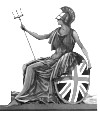
Camden's Britannia
Notes
1. Obiit. Ao. D. 1623. Aetatis Suæ LXXIII: "Died 1623, aged 73"
2. Omnes sanos a scribendo deterruit: "He deterred all sensible people from writing." Cicero, Brutus 262.
3. Demy's place: A scholarship. The stipend was half that of a fellow, hence the name.
4. Relicta academia, studio incitato satis magnam Angliae partem fide oculata obivi: "Having left the University, I faithfully observed with my own eyes the greater part of England"
5. Decem Scriptores: A collection of ten ancient chronicles on English history edited by Sir Roger Twysden (1597–1672) and published in 1652.
6. Gul. Camdenus Clarenceux, filius Sampsonis, Pictoris Londinensis, dono dedit: "Wil. Camden, Clarenceux, son of Sampson, painter of London, gave this gift."
7. The Mantuan poet: Virgil.
8. Lemma: In this sense, an inscription and signature.
9. peireskius: Nicolas-Claude Fabri de Peiresc (1580–1637), French astronomer, antiquary and savant. His research included a determination of the difference in longitude of various locations in Europe, around the Mediterranean, and in North Africa.
10. Duchesne: André Duchesne (1584-1640), French geographer and historian, generally styled the father of French history.
11. Thuanus: Jacques Auguste de Thou (1553–1617) French historian, book collector and president of the Parlement de Paris.
12. Sed valde, &c.: "I very much believe, that the moderation which you advised him to show, would have saved the story of the Scottish affair (i.e. the story of Mary Queen of Scots)"
13. Rem, &c.: "I have taken the words of the Scots who were concerned in the matter, and the letters I asked them for; and I have judged the accuracy of Buchanan's writings against them."
14. Similitudo studiorum: "Similaritiy of studies."
15. Sennight: A week.
16. Norroy: The Norroy King-of-Arms is the herald who is responsible for the whole of England north of the River Trent.
17. Nihil aliud &c: "Nothing else now remains &c.; I also consecrate something to the almighty, and to venerable antiquity. A vow which I most willingly make."
18. Cineri supposta doloso: "Ashes deceitfully presented"
19. Scruple: One minute of arc.
20. Caerulus, –i, –um: Blue.
21. Ab aquis: "From water."
22. Gades: Cadiz.
23. Adelon: "Unknown."
24. Istre: The Danube.
25. Caius Caesar: Caligula.
26. Caius Caligula Pharum Fecit: "Caius Caligula made the lighthouse."
27. Liberti: Freedmen. Much of the imperial civil service was staffed by freed slaves.
28. Friths: patches of woodland.
29. Stanked: Surrounded.
30. Lameae Luculleae: "Lucullus' blades"
31. From Panegyrici Latinae, ascribed to Eumenius the Panegyrist
32. From Xiphilin, out of Dio.
33. Divi: "Gods"
34. From Herodian, History of the Roman Empire since the Death of Marcus Aurelius 4. 2.
35. Venerabilis & Piissima Augusta: "The venerable and most pious empress"
36. Stabularia: Landlady of the lowest class of inn.
37. Eusebius, The Life of the Blessed Emperor Constantine.
38. Gelasius Cizicenus, Acts of the Council of Nicea. c. 3.
39. Gaudium Romanorum: "The rejoicing of the Romans".
40. Dominus noster: "Our Lord."
41. Catena: "a chain."
42. Ammianus Marcellinus, Roman Antiquities.
43. Sulpitius Severus.
44. Hilary, in his Epistle to the Bishops.
45. Prosper Tyro.
46. Zonaras.
47. Gildas.
48. The Malmesbury historian: William of Malmesbury (c. 1095 – c. 1143), the foremost English historian of the 12th century, author of the Eulogium Historiarum, a universal chronicle from the Creation to 1366.
49. Notitia: The Notitia Dignitatum ("The List of Offices") or Liber Notitiarum is a document of the late Roman Empire that details the administrative organization of the Eastern and Western Empires. It describes several thousand offices from the imperial court to provincial governments, diplomatic missions, and army units.
50: Ala Britannica milliaria.: British wing of one thousand
Ala iiii. Britonum in Egypto. British wing 4 in Egypt
Cohors prima Aelia Britonum. First Aelian cohort of Britons
Cohors iii Britonum. Cohort 4 of Britons
Cohors vii. Britonum. Cohort 7 of Britons
Cohors xxvi. Britonum in Armenia. Cohort 26 of Britons in Armenia
Britanniciani sub magistro peditum. British under the master of foot-soldiers
Invicti juniores Britanniciani inter auxilia Palatina. Undefeated young British men among the Palatine auxiliaries.
Exculcatores jun. Britan. Inter auxilia Palatina. Young British skirmishers among the Palatine auxiliaries.
Britones cum magistro equitum Galliarum. Britons with the Gaulish Master of Horses
Invicti juniores Britones intra Hispanos. Undefeated young British men among the Spanish
Britones seniores in Illyrico. Older British men in Illyria [The East coast of the Adriatic]
51. Tacitus. Bk. 4.
52. Centum agnos; "one hundred lambs;" pretio argenti: "pieces of silver;" centum probatos nummos: "One hundred good coins"
53. Forti brachia: "Stong arms."
54. Epatica: Liverwort
55. Spanhemius: Ezechiel von Spanheim, (1629-1710) diplomat and scholar, author of Disputationes de usu et præstantia numismatum antiquorum ("Discussions of the value and use of ancient coins"), a massive catalogue of all the ancient coins then known.
56. Erga religionem Christianam bene affectus: "That he was well disposed to the Christian religion."
57. Et rate amata titulo salutis: "And [the Cross will be] your yard-arm, the prescription for salvation." Paulinus of Nola, Poem 17.
58. Crux navigantium gubernaculum: "The cross is our rudder"
59. De temone Britanno excidet Arviragus: "Araviragus will fall from his British chariot" Juvenal, Satire 4, l. 126-7.
60. Ne vel tantillum, &c.: "So as not to leave so much of the page empty, we have selected the attached from the most learned Bouterove's Alphabet of Ancient Coins."
61. Scythic Vale: The Irish Sea
62. A lawless generation, &c.: Isaiah 1:4-6.
63. And God called them to sorrow, &c.: Isaiah 22:12-13.
64. They have burnt with fire, &c.: Psalm 74:7
65. O God, the Gentiles are come into thy heritage, &c. Psalm 79:1
66. Poenarum gurgitibus: "from the torturous depths of punishments." Poenarum means "of punishments"; Poenorum means "of the Carthaginians." – hence the confusion.
67. Caledonum aliorumque Pictorum sylvas: "The forests of the Caledonians or Picts."
68. Castrum alatum: "Winged Castle."
69. Ille Britannos, &c.:
"'Twas he, whose all-commanding yoke,
the farthest Britons gladly took;
him the Brigantes in blue arms adored,
when subject waves confessed his power,
restrained with laws they scorned before,
and trembling Neptune served a Roman Lord."
70. Caeruleos scuta Brigantes: "Brigantes with blue shields"; caeruleos cute Brigantes: "Brigantes with blue skins".
71. Browis: Broth or porridge.
72. Quoniam ante, &c.: "because before his time, when they wanted a halfpenny or farthing, they would break a penny in two or four pieces."
73. Me fecit: "Made me."
74. Monetarius: A maker of coins.
75. Pallium: A kind of scarf or collarette worn by Bishops and higher clergy: Pedum: A shepherd's crook or crozier.
76. Indoles: Innate character.
77. Sancti Petri Moneta: "Saint Peter's Mint." York Cathedral (known as the Minster) is dedicated to St. Peter.
78. Hide: "As much land as one plough can till in a year, but as others, as much as 4 virgats." [About 120 acres or 50 hectares]. This was used to determine the tax to be paid. Towns would also be assessed to pay the tax due on a particular number of hides. As a verb, to hide was to be assessed to pay this tax.
79. Lay-fee: A property the income of which goes to a layman, in return for (often nominal) services to the Crown.
80. Verge: a staff or rod.
81. Comes, plural Comites, is Latin for a companion or attendant.
82. Strigulia: Chepstow, Monmouthshire (Gwent)
83. Exercituals: Goods or money due to be paid to the Lord of the Manor on the death of a serf.
84. Mancus: A unit of money of the value of 30 pence.
85. Mark: Thirteen shillings and fourpence, or eight ounces of silver.
86. Equites vexillarii: "Knights of the banner."
87: Equites aurati: "Golden knights."
88. Librat: An area of land yielding a rent of a pound a year.
89. Milites gladio cincti. "Soldiers girded with the sword."
90. Baudekin: A richly embroidered cloth woven of silk and gold thread.
91. War-horses: Thus in the source, but glossed as "dextarios bellicosus." Dextarios is not in any dictionary but would seem to mean "right-hand men:" thus a better translation would be "bodyguards."
92. Nomina militum, baccalaureorum, & valectorum comitis Glocestriae: "The names of the knights, bachelors, and squires of Gloucester."
93. Quasi bas chevaliers: "As if to say, low knights."
94. Assizes of novel disseisin: Hearings of cases where a person claims to have been wrongfully dispossessed of their land.
95. Harbinger: A person who goes in advance of an army to arrange lodgings for the troops.
96. Nunc dimittas servum: "Now thou dost dismiss thy servant" Luke 2:29.
97. Ex legibus Allamannorum, &c.:"Out of the laws of the Alamanni; if any marshal who has the care of twelve horses, kill any person, let him pay four shillings."
98. A potiori: "As the stronger argument."
99. Magister equitum: "Master of horses;" Tribunus militum: "Military tribune," the rank above centurion in the Roman army.
100. Praetor comitatus augustalis: "Magistrate attending the Emperor"
101. Regiae procurator aulae: "Procurer of the King's lodgings."
102. Vidi plurimos, &c.: "I saw very many, who reached out a bountiful hand to the Marshals. When they had, with much ado, found a lodging after the fatigue of a long journey, and while their meat was half raw, or perhaps while they were sitting at table, nay, sometimes when they were asleep in their beds; the Marshals coming upon them, would, in a supercilious and abusive way, cut the collars of the horses, and throw out the baggage without distinction and not without damage, and turn the people out of their lodgings in a shameful manner."
103. Regis avus, &c.: "The King’s grandfather, that is, Henry the First, enfeoffed Wigan, his Marshal, in certain tenements, which he held of him by service of the Marshalcy; and the King restored them to Ralph, son of Wigan, as his Marshal."
104. Johannes Dei gratia, &c.: "John, by the grace of God, &c. Know ye, that we have granted, and by this our present Charter, have confirmed, to our well beloved and faithful William Marshal, Earl of Pembroke, and to his heirs, the office of Marshalcy, in our Court; which office, Gilbert, Marshal of King Henry our grandfather, and John, son of the said Gilbert, claimed before the said King, in his Court, against Robert de Venois, and William de Hastings, who also claimed the same office ; and in this judgment, because they did not make good their claim, at the day which the said King Henry appointed them, as the King’s own Charter, which we have seen, witnesseth."
105. Spoliavit me, &c.: "Deprived me of the office of Marshal, which belongs to me in right of inheritance, and which I was in possession of; and would by no means restore it to me, when demanded."
106. Haereditaria succession, &c.: "This office does not have an hereditary succession."
107. Multiplicatis, &c.: "Upon repeated intercessions, the Marshalcy, with the office and honour, was granted to Earl Roger Bigod, in right of his mother, the Countess, who was eldest daughter of the great Earl William Marshal."
108. De assensu parliament &c.: "By assent of Parliament, to him, and to the heirs male of his body begotten."
109. Marescallus meretricum: "Marshal of whores."
110. Marescallus de quolibet, &c.: "The Marshal of every Earl, and Baron holding an entire barony, shall be contented with one palfrey, [small saddle-horse] or with the price of it, such as he hath used to have of old: so that, if he took a palfrey, or the price of one, at the doing of his homage, in form aforesaid, he shall take nothing when he is made Knight: and if he took nothing at the doing of his homage, when he is made Knight he shall take the same. Of Abbots and Priors, holding a whole Barony, when they do homage or fealty for their baronies, he shall take one palfrey, or the price, as afore is said. And this shall also be observed amongst Archbishops and Bishops. But of such as hold but one part of a barony, whether they be religious or secular, he shall take according to the portion of the part of the Barony that they hold. Of religious men that hold in free alms, and not by a barony, nor part of a barony, the Marshal from henceforth shall demand nothing."
111. Qua faciant herbegeriam: "What would pay for their lodging."
112. De officio marescalciae, &c.: "In the office of Marshalcy, survives William Marshal Earl of Strigal, whose duty it is to appease tumults in the King's House and to make delivery of Lodgings, and to keep the gates of the Royal Palace. He hath, of every Baron who is made Knight by the King, and of every Earl, that day, a horse, with the Saddle."
113. In marescaugia, & per virgam mareschalliae: "In marshalcy, and under the rod of the Marshal."
114. Great meridian: As defined by Ptolemy, his prime meridian was the longitude of the "Fortunate Isles," which he placed at what is now 20 degrees West or thereabouts.
115. Precopensian Chersonese: The Crimean Peninsula.
116. Sea-holm: Sea Holly (Eryngium maritimum,) gathered for its edible roots.
117. Chersonese: A peninsula.
118. Cinque Ports: In mediaeval and early modern times, five ports in South-East England which had special status and privileges. They were Hastings, Winchelsea, Hythe, Dover and Sandwich.
119. Doniert: rogavit pro anima: "Doniert supplicated for his soul""
120. Doniert erogavit: "Doniert paid out."
121. Lixivium: A solution made by passing water through a substance which contains both the soluble material and an insoluble residue.
122. This is untrue. In fact, the introduction of the new prayer book in 1549 provoked a serious rebellion in which thousands of Cornishmen were killed. See https://en.wikipedia.org/wiki/Prayer_Book_Rebellion.
123. Judaeos, impulsore Chresto, tumultuantes: "The rebellious Jews, stirred up by Chrestus." Suetonius, Lives of the Twelve Caesars, Claudius, section 25.
124. In commendam: A diocese or deanary held in commendam is one which does not have a bishop or dean of its own but is held by another person, usually the bishop or dean of another diocese.
125. Geld: To pay tax. Gelt: Taxes.
126. Peutingerian Table: a map on parchment of the military roads of the ancient Roman Empire, supposed to be a copy of one constructed about A.D. 226. It was found in the 15th c. in a library at Speyer, and came into the possession of Konrad Peutinger of Augsburg (1465–1547), in whose family it remained till 1714; it is now in the Austrian National Library at Vienna.
127. Castle-guard: A kind of knight-service, whereby a feudal tenant was bound, when required, to defend the lord's castle; the tenure of such service; also, a payment in lieu of this service.
128. Sæpe etiam steriles, &c.: Virgil, Georgics bk. 1, l. 84 ff.
129. De laudibus legum Angliae: "On the Praiseworthy Laws of England" a legal treatise, written c. 1470 for the instruction of Edward, Prince of Wales, son of the deposed king Henry VI of England.
130. Canutus rex donat hoc manerium eccles. Exon.: "King Canute gave this manor to the church of Exeter"
131. The abbreviations following each Latin name, give the authority which calls the plant by that name, and are as follows:
Bobart, Bobert, Bob. = Jacob Bobart, Catalogus Plantarum Horti Medici Oxoniensis (1658)
Bocc. = Paolo Boccone (1633-1704), author of many botanical works
Bot Monsp. = Pierre Magnol, Botanicum Monspeliense sive Plantarum circa Monspelium nascentium (1676)
Cat. Cant., Cat. Cantab., Cambridge Catalogue = John Ray, Catalogus plantarum circa Cantabrigiam nascentium. (1660)
C.B. = Caspar Bauhin, Pinax Theatri Botanici, (1623)
C.B Prod. = Caspar Bauhin, Prodromos Theatri Botanici (1671)
Clu., Clus., Clus. Hist = Carolus Clusius, Rariorum Plantarum Historia (1601)
Clu. cur. post. Carolus Clusius, Curae posteriores, &c. (1611)
Clus. Pan. = Carolus Clusius, Rariorum aliquot stirpium, per Pannoniam, &c. (1583)
C. Merrett = Christopher Merrett Pinax rerum naturalium britannicarum (1666)
Col. = Fabio Colonna (1567 – 1640), author of several works of natural history.
D. Plot = Robert Plot (1640 – 1696) Professor at Oxford and Keeper of the Ashmolean Museum, author of The Natural History of Oxfordshire. (1671)
D. Lawson = Thomas Lawson (1630–1691); unpublished notes
Dod. = Rambertus Dodonaeus alias Rembert Dodoens (1517-1585), author of a famous Herbal first published in 1554.
Ger. = John Gerard, Herbal (1597);
Ger. Emac.= John Gerard, Herbal, amended and expanded by Thomas Johnson (1633)
Gesn. = Conrad Gesner (1516-1565), Historia Plantarum (unpublished at his death but used as source by many subsequent writers.)
H. Reg. Blaes. = Robert Morison, Hortus Regius Blesensis (1669)
Hist. Nost = Historia generalis plantarum, John Ray(1668)
J.B. = Jean Bauhin, Historia plantarum universalis (1651)
Lob. = Mathias de Lobel, Plantarum Seu Sti rpium Historia (1576)
Lob. Belg. = Mathias de Lobel, Universis Galliae Belgicae (1576)
Magnol. = Pierre Magnol, Botanicum Monspeliense sive Plantarum circa Monspelium nascentium (1676)
Morison, Moris. Hist. = Robert Morison, Plantarum Historiae Universalis Oxoniensis (1680)
Park. = John Parkinson, Theatrum Botanicum (1640).
Park Parad. = John Parkinson, Paradisi in Sole (1629)
Phyt. Brit., P. B. = William Howe, Phytologia Britannica (1650)
Plukenet = Leonard Plukenet, Phytographia (1691-6)
Raii = John Ray, Historia plantarum generalis (1705)
Thal. Harcyn = J. Thal, Sylva hercynia (1588)
Trag. = Hieronymus Tragus, Kreuterbuch (1539)
Note also that if there is no generic name (capitalized) in a reference, then the authority gives the plant the same generic name as the previous authority. Also, An (latin name) ? means "Is this same plant as?" Sive or seu indicates an alternative name.
132. Sedge-plat: an area of flat ground covered in sedge (a coarse kind of grass).
133. Chalcanthum, copperas: Copper sulphate.
134. Juratores, &c.: "The jurors say, that before the building of the castle of Corfe, the Abbess and nuns of St. Edward at Shaston [Shaftesbury] had the wreck of the sea within their manor of Kingston, without loss or molestation."
135. Praetorium: In Roman times, the residence of the governor of a province or military commander.
136. Agonal: A book of the lives of martyrs.
137. Hamfare: The crime of assaulting a person in his own house or dwelling-place, or the right to try and punish this offence.
138. these verses, with a very little alteration, are in the 4th book of Venantius Fortunatus his poems; partly in praise of the church at Paris, and partly of that of Nantes.
139. Molae: Grinding teeth.
140. Percepier: Parsley-Piert (Aphanes arvensis)
141. Retrahere ducem: "To bring back the general."
142. Lapis calaminaris: Calamine, an ore of zinc. Chemically it is either zinc carbonate or silicate.
143. Bolus Armenius: An astringent clay from Armenia, used as an antidote and styptic.
144. Menology: A calendar of the feast days of the different saints in the ecclesiastical year; also often containing notes of significant events which took place on the date.
145. Fidelis: Faithful. Felicis: Happy.
146. Champaign: Fertile open country.
147. Touchstone: A dense-textured black stone. (The font is still (2021) in Preshute church; it is believed to have been made in the 12th Century in what is now Belgium)
148. Cujus vocabulum temis, &c.: "Which is called Thames, next to the ford called Summerford."
149. Graff: A trench serving as part of a fortification.
150. Actum publice juxta flumen Badon: "Officially issued beside the river Badon."
151. Cauna nunquam geldavit, &c.: "Calne never paid taxes so it is not known how many hides" [see note 78]."
152. Ethelmundus fines suos egressus, &c.: "Ethelmund went past the boundaries, as far as the ford of Chimeresford."
153. Seized: Owned or occupied.
154. Tithing: a group of ten households.
155. Quod ad emendationem, &c.: "That for the benefit of the said city, they change and remove the ways and bridges leading to it, and do therein what to them shall seem appropriate, provided it be done without injury to any person."
156. Chorea Gigantum; Chorea Nobilis; Chorea Magna: "Giant's Dance;" "Nobles' Dance;" "Great Dance."
157. Paganorum Sepulchretum: "Burial-place of the pagans."
158. Amblesbury nunquam geldavit, nec hidata fuit: "Amesbury never paid taxes or had hides" See also note 78 above.
159. Assumption-Day: 15th August.
160. Obruendarium: A burial urn. Vascula Cineraria: A metal vessel for holding ashes.
161. Palfrey: A small saddle-horse.
162. Ventus: The wind; vinum: wine.
163: Ab Italia Sicilia resecta: "Sicily is cut off from Italy;" rejecta: "thrown off.
164. In occidentali parte Britanniae: "In the Western part of Britain."
165. Georgius Morley Episcopus &c.: "Bishop George Morley built these buildings at his own expense."
166. Ade hic, &c.: "Good folks, in your devotions, pray for the one signed with the cross, who renovated me."
167. Garumna: The River Garonne.
168. Bibracte, Bray: The modern name is Beuvray.
169. Tach: a fastening.
170. Eadem semper: "Always the same" -- Queen Elizabeth's motto.
171. Ferarum statio: "An abode of wild animals."
172. Et tenera poneret ossa rosa: "And tenderly laid roses on your bones." Propertius, Elegies Bk. 1.17 l. 22.
173. Copped: Having the top cut off.
174. Delf: A mine or quarry.
175. Lusus naturae: "A freak of nature."
176. Flashes: Pools of water; a rush of water caused by opening a sluice gate from one.
177. Credite operibus: "Believe in deeds." (shortened from the Latin proverb Credite operibus et non verbis. "Believe in deeds and not words.")
Dilexi decorem domus tuae, Domine: "I have loved, O Lord, the beauty of thy house." Psalm 25.8.
178. Exploratores: A special corps of soldiers in the Roman Empire, who acted as spies and watchmen.
179. Gavelkind: A law or custom which required that at a man's death his property must be divided between all his sons.
180. Olim vento, &c. "The name comes from the former cold and harsh winds from the sea."
181. Triarii. In the early (pre 1st c. BC) Roman army, these were an elite section of soldiers in each legion; they were the most experienced and had the best armour and weapons.
182. Xantoigne: Also spelled Saintonge, was a French province corresponding to the modern department of Charente-Maritime, the area just north of the mouth of the Gironde.
183. Juvenal, Satire 4, l. 140-143.
184. Joseph of Exeter (fl. 1180-1200) took part in the Third Crusade, and on his return wrote an account of it called the Antiocheis, of which only fragments survive.
185. Pharum: a lighthouse; phanum: a lake or swamp.
186. Turnacenses: A troop of Roman soldiers from Tournai (Doornik) in present-day Belgium.
187. Foristell: Highway robbery.
188. Holm trees: Holly trees.
189. Abulci: A troop of Roman soldiers from Avila in present-day Spain.
190. Little Britain: Brittany.
191. Henricus Howardus, &c.: "Henry Howard, son of Henry Count of Surrey; nephew of Thomas, the second Duke of Norfolk; brother of Thomas the third [Duke]; Earl of Northampton; Baron Howard of Marnhull; Keeper of the Privy Seal; Constable of Dover Castle; Warden, Chancellor and Constable of the Cinque Ports; Privy Councillor of James the Great King of Britain; Golden Knight of the Garter; and Chancellor of the University of Cambridge; most learned among nobles; is here laid in the hope of resurrection in Christ.
Died 15th June 1614.
this renowned Earl founded three hospitals, and endowed them with lands; one at Greenwich in Kent, in which a governor and 20 poor men; another at Clun in Shropshire, in which a governor and 12 poor men; a third at Castle Rising in Norfolk, in which a governess with 12 poor women, are maintained for ever."
192. maison-dieu: A hospital, hostel or almshouse, founded and supported as a charitable act.
193. Secus fontes cantianos: "Opposite the waters of Kent."
194. Monasticon: Monasticon Anglicanum, or, the history of the ancient abbeys, and other monasteries, hospitals, cathedral and collegiate churches, in England and Wales, by William Dugdale, 1655; English translation 1693.
195. Opus musivum: Mosaics.
196. Fibulae: Buckles or brooches used to fasten a garment.
197. Ad lapidem tituli: "At the place called the Stone."
198. Supra ripam Gallici maris: "On the shore of the English Channel."
199. In littore oceani ad meridiem: "On the sea shore towards the South."
200. Lay: a pond.
201. Hanc aulam, &c.: "Duke Dodo consecrated this royal palace to the church."
202. Dec. coloniae, &c.: "Decurion of Colonia Glevum, lived 86 years"
203. Icre: Ten bars of iron.
204. Aestuation: Foaming or boiling up of water.
205. Sewer: The head waiter or steward at a feast.
206. Mine-Court, Swain-Moot, and Speech-Court: Courts established in the Middle Ages to try cases occurring in the Forest of Dean, relating to mining; forestry and game; and general crimes, respectively.
207. hoc quod digestum, &c: "This work which you see, was built and adorned by the labour of Tully, at the command of Abbot Seabrook."
208. Blue-Coat: It was standard practice for charity pupils and inmates of other charitable institutions to wear a blue uniform.
209. Tesseraic: Mosaic
210. a boar: The crest of the family of de Vere.
211. Parca sylvestris bestiarum: "A wooded reserve for animals"
212. Bellositum: "Beautifully situated."
213. Sextary: An ancient liquid measure equivalent to slightly more than a pint i.e. about 600 ml.
214. Locus celebris: "A famous place"
215. De Consolatione Philosophiae: See http://www.exclassics.com/consol/conintro.htm
216. Scripta fuit, &c.: "This schedule was written, at the command of the fore-mentioned king, in the royal villa, &c."
217. Domine pro domino, &c.: "O our Lord (for the Lord’s sake) take care of the Church, which is now in a tottering state. The University of Paris, the mother and mistress of so many holy Prelates, is greatly disturbed. And if the University of Oxford (which is the second school of the Church, yea the very foundation of the Church) be disturbed at the same time, it is much to be feared, that the whole Church will be ruined and undone."
218. Aula Scholarium Reginae de Oxon: "The Queen's Hall of scholars of Oxford."
219. Priories-alien: Religious houses which were small dependencies of foreign (usually French) mother houses. Because of this French influence, they were dissolved and their property seized during the Hundred Years' War between England and France.
220. Virgate: a measure of land, varying considerably but usually about 30 acres (12 hectares).
221. Yard-land: an area of land, varying in size according to the locality, but usually about 30 acres (12 hectares).
222. Locus gelidus: "A frozen place."
223. Saltus qui dicitur Clitern: "The forest called Clitern."
224. Sinus: "A curve or hollow."
225. Vicus: "A street or row of houses."
226. Castellum: "A castle."
227. Green geese: Young geese killed and eaten in the summer, before they get fat.
228. Petrary, Mangonel: Siege engines which threw large stones at the enemy's fortifications.
229. Civilian: An expert in or practitioner of "Civil" (i.e. Roman) law, as opposed to Canon (church) law or Common law.
230. Hexastich: A stanza of six lines.
231. Escheator: An escheat was when a feudal tenant died with no eligible heir; in such a case the land reverted to the crown. The escheator was an official who administered escheats.
232. Rubrum vadum: "Red ford."
233. Cross fleury: A cross with fleur-de-lys-like ornaments at the end of each arm.
234. Flamen: The official (pagan) priest of a city.
235. Vaumure: A outer wall surrounding a castle or fortification.
236. Rodericus Toletanus, lib. 1
237. Milliarium: "A milestone"
238. Breviat: A brief account.
239. Custos rotulorum: "Master of the Rolls" (records)
240. Hanaper: The department of the Chancery, into which fees were paid for the sealing and enrolment of charters and other documents.
241. Constat out of the Pell-office: A certificate from the department of the Exchequer.
242. Lachrymatories: Small bottles, believed to have been used to hold tears. Patinae: Shallow dishes.
243. Arpenni:Or arpent, an old French measure of land varying from one-third to half a hectare. Modius: A volume equal to a bushel, i.e 8 gallons or about 36 litres.
244. Stob and stock: Stump and trunk (of trees)
245. Racche: A hunting-dog which pursues its prey by scent.
246. Camvlo deo sancto et fortissimo: "To Camulus the holy and most powerful god:"
247. CN. MVNATIVS, &c.: "Gnaeus Munatius Aurelius Bassus, son of Marcus of the Palatine Tribe, Procurator of the Emperor, Prefect of the Armourers, Prefect of the Third Cohort of Archers, Prefect again of the Second Cohort of Asturians, Census Officer of the Roman Citizens of Colonia Victricensis, which is in Britain at Camulodunum, Overseer of the Nomentum Road, Patron again of the same municipality, Priest for life, Aedile with magisterial power, Dictator four times"
248. Ad Ansam: "To the handle"
249: Ad columnam, ad fines, ad tres tabernas, ad rotam, ad septem fratres, ad aquilam minorem, ad Herculem: "To the column, to the boundaries, to the three taverns, to the wheel, to the seven brothers, to the lesser eagle, to Hercules."
250. Enragled: Of a cross, or division on a coat of arms, having short oblique projections resembling the stumps of branches cut off close to the stem.(More often called raguly.)
251. Piissima: Most pious; Venerabilis Augusta: Empress worthy to be venerated.
252. The ingenious epigrammatist: Martial. The quotation is from Epigrams, Bk. 3 Ep. 58.
253. V. Lapidem: "At the 5th stone"
254. Coccilli manibus: "By the hands of Coccillis"
255. Sac and soc: The authority to hold a court to hear cases and try criminals.
256. Frank-marriage: "A tenure in virtue of which a man and his wife held lands granted to them by the father or other near relative of the wife, the estate being heritable to the fourth generation of heirs of their bodies, without any service other than fealty." (OED)
257. Banna Leuca: The area of jurisdiction of a monastery which exercised a secular authority.
258. Mark: Thirteen shillings and fourpence i.e. two-thirds of a pound.
259. Ductus in Cangos exercitus: "The army was led into the land of the Cangi."
260. Jamque ventum haud procul mari, quod Hiberniam Insulam spectat: "And now not far from the sea, where the island of Ireland is seen."
261. Facta autem, &c.: "Being unanimously approved, they brought him unto Suffolk, and, in the village called Burum, made him King; the venerable prelate Hunibert assisting, and anointing and consecrating Edmund to be King. Now, Burum is an ancient royal vill, the known bound between Essex and Suffolk, and situate upon the Stour, a river most rapid both in summer and winter."
262. Baulk: A strip of ground left unploughed as a boundary line between two ploughed sections belonging to different people. (OED)
263. Garienis, &c.: Nowadays called the River Yare.
264. Lardiner: The person responsible for providing the food and drink for a feast.
265. Portuenses and Lestoffenses: People of the Cinque Ports, and of Lowestoft, respectively.
266. hunc pincerna locum fundavit, &c.: "The butler founded this place, and lies here; the endowment he gave to it, it holds in perpetuity."
267: Porta praetoria, porta decumana: The front and rear gates, respectively, of a Roman fort.
268. Sepulchrum cespes erigit: "He erected a tomb of earth."
269. Fossi: "Trenches"
270. Ebulum or Danewort/Daneweed: Dwarf Elder (Sambucus ebulus)
271. Castra &c.: "He commanded a camp to be made, with a rampart twelve feet high and a ditch eighteen feet deep."
272. Stat Margareta, &c.: "The dragon fled, Margaret stood, rejoicing in the cross". Her legend says that she was swallowed by Satan in the shape of a dragon, from which she escaped alive when the cross she carried irritated the dragon's innards.
273. Terra ecclesiae: "Church land."
274. Ensis, &c.: "This sword was the gift of King John, taken from his own side."
275. Caeli gravitas e palustri situ: "Heaviness of air from the marshy situation."
276. Advowson: An advowson is the right to appoint a person to be the vicar of a parish or other ecclesiastical position in the Church of England. As a property right, it could be bought and sold, or willed or given away.
277. Cods: Seed capsules.
278. Ferling: The fourth part of a hide (see note 78)
279. Bordarii: Cottagers.
280. Band of Gentlemen Pensioners: A troop of soldiers made up of former army officers. Originally founded by Henry VIII as a personal bodyguard, they are now called The Honourable Corps of Gentlemen at Arms, and their duties are purely ceremonial.
281. Hythlodaeus: Thomas More's Utopia describes an imaginary island where there is an ideal society, as related to More by Raphael Hythlodaeus.
282. Disseised: Dispossessed.
283. In capite: Held as a feudal tenant directly from the King, with no intervening lord.
284. Wharling: Pronouncing the letter r with a burr or guttural sound.
285. Beadhouse: An almshouse for poor people, who were expected to pray for the soul of the founder. (Bead is an old English word meaning prayer.)
286. De Pratis: "Of the meadows."
287. De Contemptu Mundis: "Of the rejection of the world."
288. Cross-moline: A cross with two projections curved out like the flukes of an anchor at the end of each arm.
289. General Tail: A form of feudal possession of an estate, the inheritance of which is not restricted to particular descendants of the first owner, but designed to pass to all of said owner's descendants so long as such issue is alive.
290. Gavelkind: The practice of dividing a man's property, after his death, between all his sons in equal shares.
291. Com. Roteland. & villam de Rokingham in com. Northampt.: "The County of Rutland and the villa of Rockingham in the County of Northamptonshire."
292. Merchant of the staple: A merchant licensed to export goods (especially wool) from England. There were not many of these, and they were a wealthy and powerful group. A staple was a market where these goods were traded.
293. Ego Robertus comes Rutland: "I Robert Count of Rutland."
294. Sac and soc: The authority to hold a court and execute justice (both civil and criminal) within a defined area.
295. Amerce, Amercement: Fine; Amerced: fined.
296. Inspeximus: A charter beginning with the Latin word Inspeximus (‘We have inspected’). It is declared in the charter that an earlier charter or letters patent, here quoted or summarized, has been examined and its validity confirmed. (OED)
297. Eo quod in terra peregrine &c.: "Because he was a gift of God to console his pious parents in their wanderings in exile in a foreign land."
298. ab officio: "From the office"; a beneficio: "From the income."
299. Peculiar: A parish or church exempt from the jurisdiction of the bishop in whose diocese it lies. Prebend: An ecclesiastical position the salary of which was a certain part of the income of the establishment to which it belongs. Prebendary: the holder of such an office.
300. Remigius, &c.: "Remigius, endowed with a certain innate prudence, and by the grace and help of God, took pains to transfer his cathedral seat, from an exceedingly incongruous and obscure place, to a splendid city, that is, Lincoln, which is convenient to the whole of Lindsey, from the Humber to the River Witham, which passes through Lincoln and waters a great area of land. He did this despite being opposed by the archbishop of York, a powerful adversary."
301. Ad faciendum pomerium: "To make an open space outside the walls"
302. Thrave: A measure of corn, usually 24 sheaves.
303. Distaffs: i.e female relatives.
304. Deo marti, &c.: Subsequent to this publication, the inscription has been fully deciphered, and means "Quintus Sittius Caecilianus, prefect of the First Cohort of Aquitanians, fulfilled his vow to the God Mars & [Goddess] Bracacia,."
305. Dalmatia: A Roman province on the west coast of the Balkan peninsula, north of Greece.
306. Honorius Decretals 3:14.
307. De auxilio villarum &c: "Of the towns and boroughs taxed for the marriage of the King's daughter."
308. Merciorum Domina: "Lady of the Mercians"
309. Trophaeum peccati: "The monument of a sinner."
310. Inter puritanos antesignanus: "A leading warrior among the Puritans."
311. Arras: A rich tapestry fabric, in which figures and scenes are woven in colours.
312. Soli Deo, &c.: "Glory to God alone. A school for poor boys and girls."
313. Enfeoff: To give full ownership of a property.
314. Salop: Shropshire
315. Malvesey: A strong sweet wine from Crete.
316. Danegeld: A tax supposed to be used to pay troops to fight the Vikings, or in some cases just to buy them off.
317. Strike: A measure of grain, varying from one place to another, but officially equal to 2 bushels (72 litres)
318. Septum agresti aggere,&c.: "Protected by a rustic embankment with a narrow approach, designed to be unpassable by cavalry."
319. Agger: A mound formed by the earth thrown up from a trench.
320. Cottons: A kind of woollen (not cotton) cloth resembling serge.
321. Long robe: The legal profession.
322. Carucate: An area of land, being as much a one plough team (of 8 oxen) could plough in a year. Hestha: A loaf of bread. Cuna: A vat of ale. Rusca: A tub of butter.
323. Habergeon: A sleeveless chain-mail shirt.
324. Totum hunc dedit &c.: "He gave all this county to be held to the sword by him and his heirs, so freely as the king of England himself held the crown."
325. Coram non judice: "Not before a judge." A legal term typically used to indicate an invalid legal proceeding that is outside the presence of a judge, with improper venue, or without jurisdiction. Wikipedia
326. Quascunque alias libertates &c.: "All other liberties and royalties whatsoever, belonging to a County Palatine, as freely and entirely as the Earl of Chester is known to enjoy them, within the said County of Chester.
327. A tempore conquestus & antea: "From the time of the Conquest and before."
328. Comitatui singulare est, &c.: "It is peculiar to the County of Chester, that it enjoys the title of a Palatinate ; a title, not to be found elsewhere, but only among the Germans."
329. Jovi Optimo Maximo, &c.: "Titus Elupius Galerius, currently commander of the Twentieth Victorious Valeria Legion, during the consulship of Commodus and Lateranus [154 A.D.] willingly pays deserved homage to Jove the best and greatest." [TN]
330. Quod ibi emeriti legionum Julianarum resedere: "Because there the old soldiers of the Julian legions were settled."
331. Orate pro animabus, &c.: "Pray for the souls of Roger Legh and Elizabeth his wife; which Roger died the 4th day of November A.D. 1506 and Elizabeth, on the 5th day of October A.D. 1489; to whose souls may God be merciful."
332. Tiugui, &c.: "Towy – from Taratir above the bank of the Wye as far as the bank of the Towy."
333. Scutifer: Shield-bearer.
334. o gweli, &c.: "If you see a red-haired, one-eyed man seeking his lost sheep, say that it is under a hill, and the mark of fire on its head."
335. Panchaea: An unidentified island in the Indian Ocean, mentioned by various classical authors. Cathay: China.
336. Jovi optimo, &c: "To Jupiter Dolichenus the best and greatest, whence iron is produced. Caius Sempronius Rectus, centurion frumentarius" (a frumentarius was the organizer of provisions for an army. They were also sometimes used as spies.)
337. Ex monitu dei, &c.: "Whatever the pagans did, they wished it to be by the advice of god, and the command of gods and goddesses.
338. Patre (not matre) carcere incluso: "To the father (not the mother) imprisoned in jail."
338. Date mihi, &c.: "Bring me myrrh and fire for the altar, that I may pay adoration to my Lucina. Place it here, and go out of my sight. —
Astaphium, where are you? Bring me vervain, frankincense, and sweetmeats."
339. Thirty Tyrants: The group of oligarchs installed by Sparta to rule Athens after its defeat in the Peloponnesian war. Their rule lasted from 404-403 BC.
340. Bodvocus, &c.: "Here lies Bodvocus, son of Catotis, Great-grandson of Irnus, eternally in this tomb". This stone is now in the Margam Stones Museum; where the inscription is transcribed as BODVOCI HIC IACIT FILIVS CATOTIGIRNI PRONEPUS ETERNALI VEDOMAVI ("[The stone] of Bodvoc. Here he lies, son of Cattegern [or Cattegirn], and great-grandson of Eternalis Vedomavus").
342. Docta lyra grata, &c.: "Sabis, a girl who was beautiful, agreeable, graceful in movement, and accomplished on the lyre, here lies forever buried in this tomb."
343. Lapis molaris: Millstone grit.
344. Ad campum, &c.: "At the field of Electus, in the country called Glevising."
345. servator fidei, &c.: "Here lies Paulinus, a preserver of the faith, always a lover of his country, a most pious worshipper of justice."
346. In the list the text in roman letters is the inscription on the coin; the text in italics is a description of the picture(s), translated as follows:
No. 1. Navis praetoria. "An admiral's flagship of the Roman Navy." Duo vexilla castrensia, cum tertia in medio longe breviori, in cujus summo, aquila alis altius erectis. "Two camp flags with a third in the middle, shorter in length, at the top of which is an eagle with its wings held up."
No. 2. Navis praetoria: "An admiral's flagship of the Roman Navy." Duo signa castrensia cum aquila legionaria: "Two imperial insignia as used on campaign, with the eagle standard of a legion."
No. 3. Navis praetorian: "An admiral's flagship of the Roman Navy." Tria vexilla castrensia: "Three camp flags."
No. 4. Caput forte Neptuni cum tridente a tergo: "The head perhaps of Neptune with a trident behind." Victoria in dorso delphini: "Victory riding a dolphin." Hic nummus etiam M. Antonii videtur: "Mark Anthony is also seen on this coin."
No. 5. Imago virginis Vestalis: "Image of a Vestal virgin." Templum Vestae cum sella & urna: "The temple of Vesta with a stool and water jar."
No. 6. Imago Libertatis. "Image of Liberty" Templum vestae cum sella curuli & urna: "The temple of Vesta with a stool, chariot, and water jar."
No. 7. Imago Dianae. — nummus serratus. "Image of Diana — a coin with notches round the edge."
No. 8. Aper venabulo trajectus cum cane venatico.: "A boar with a spear and a hunting dog." Imago Dianae cum pharetra & arcu: "Image of Diana with quiver and bow.
No. 9. Caput Romae."Roman head" Quadriga. "A carriage drawn by four horses."
No. 10. Victoria in trigis: "Victory in a carriage drawn by three horses." Deae cujusdam imago: Image of the Goddess
No. 11. Juno sospita in bigis: infra serpens Lanuvinus: "Juno the preserver in a carriage drawn by two horses, below,the dragon of Lanuvinus. Junonis sospitae imago: "Image of Juno the Preserver." Nummus serratus: "A coin with notches round the edge."
No. 12. Taurus decurrens. "A running bull." Sospita Juno: "Juno the Preserver."
No. 13. Victoria in quadrigis. "Victory in a carriage drawn by four horses" Caput Romae: "Roman head" Nummus serratus: "A coin with notches round the edge."
No. 14. Elephas cum dracone.: "An Elephant and a dragon." Capeduncula, Aspergillum, Securis, & Albogalerus: signa Pontificis Maximi & Dialis Flaminis.: "Sacrifice dish, sprinkler, cleaver and white hat: the insignia of the chief priest of Rome and the priest of Jupiter."
No. 15. Caput Augusti, sine inscriptione: "The head of Augustus, with no inscription." Figura stolata, dextra ramum, sinistra cornucopiae: "A figure in a long robe, holding a branch in the right hand and a cornucopia in the left."
No. 16. Figura sedens, dextra hastam, sinistra ramum. "A seated figure, holding a staff in the right hand and a branch in the left."
No. 17. Caput Agrippinae.: "The head of Agrippina."
No. 18. Jupiter sedens, dextra fulmen tenens, sinistra cathedrae innixa "Jupiter seated, holding a thunderbolt in the right hand and leaning on the chair with the left hand."
No. 19. Figura cathedrae insidens, dextra pateram. "A figure seated in a chair, holding a libation dish in the right hand."
No. 20. [forte generis humani] figura stans coram ara accensa, sinistra temonem, dextro pede globum calcans. "A [perhaps human] figure standing in front of a burning altar, holding a pole in the left hand, with the right foot resting on the globe."
No. 21. Figura stans, dextra corollam, sinistra bacillum: "A standing figure, holding a crown in the right hand and a wand in the left"
No. 22. Caduceum alatum: "A winged caduceus [A wand with two serpents twined round it, as carried by an ancient Greek or Roman herald]
No. 23. Pegasus. "The winged horse."
No. 24. Pallas navi insistens, dextra jaculum, sinistra scutum. "Pallas standing on a ship, holding a throwing-spear in the right hand and a shield in the left."
347. Auro & argento caelatum: ""Carved in gold and silver."
348. Ingenious gentleman: John Aubrey of Eaton Pierce in Wiltshire.
349. Vitelliani Emeriti: "Of the retired Vitellianus."
350. Fretum: "A strait."
351. Eligug: Guillemot. Harry-bird: Shearwater.
352. Hic jacet, &c.: "Here is buried Idnert, son of I… who was murdered for his piety and holiness."
353. Saxum foeminae giganteae: "The Giantess's stone."
354. Llyn Tegid, Pemble Mere: Now called Bala Lake in English.
355. Torqueo: "To twist."
356. Torques erant mobiles, &c.:"The torques were moveable, and made of rings; the circles solid and round; and the monilia, a little broader.".
357. Vasti parma, &c.: "He brought back the great shield of the chief Vidomarus, . . . [who when he] stained his striped trousers with his own blood, the twisted necklace fell, a prize, from his severed throat." Propertius, Elegies, Bk. IV.
358. Leolinus torqui aureo insignitus: "Llewellyn invested with a golden torque."
359. cornea bina ferunt, &c.: "Each carries two dogwood spears tipped with steel; some have polished quivers on their shoulders; above their breast and round their neck goes a flexible circlet of twisted gold." Virgil, Æneid, Bk. V. l. 556-559.
360. Porius, &c.: "Porius is buried in this tomb; he was a Christian man."
361. Turbary: Boggy or moorish ground where fuel turfs are dug up.
362. A choro pulchro: "From a beautiful choir;" Quasi locus chori: "The place of a choir."
363. Lacus cespitis: "Lake of the turfs (sods)."
364. Choerocephalus: "Pig-headed"; Flavicomus: "Yellow-haired"; Canus: "White-headed;" Capito: "Big-headed"; Bucephalus: "Ox-headed."
365. Musculus niger omnium crassissima & ponderosissima testa: "The all-black mussel with the fattest and heaviest shell."
366. Draco Insularis: "The dragon of the island."
367. Urbs Legionum: "City of the legions."
368. Federal: Of or pertaining to a covenant or treaty.
369. — filius Ulrici erexit hunc lapidem: " — son of Ulrich erected this stone".
370. Lapis insculptus sive lineolis exaratus: "A stone carved or written with small lines."
371. Legio Vicesima Victrix: "Victorious twentieth legion."
372. Gemmae anguinae: "Snake jewels."
373. Praeterea est ovorum, &c.: "There is another kind of egg, held in high renown by the people of the Gallic provinces, but totally omitted by the Greek writers. In summertime, numberless snakes become artificially entwined together, and form rings around their bodies with the viscous slime which exudes from their mouths, and with the foam secreted by them: the name given to this substance is "anguinum." The Druids tell us, that the serpents eject these eggs into the air by their hissing, and that a person must be ready to catch them in a cloak, so as not to let them touch the ground; they say also that he must instantly take to flight on horseback, as the serpents will be sure to pursue him, until some intervening river has placed a barrier between them. The test of its genuineness, they say, is its floating against the current of a stream, even though it be set in gold. But, as it is the way with magicians to be dexterous and cunning in casting a veil about their frauds, they pretend that these eggs can only be taken on a certain day of the moon; as though, forsooth, it depended entirely upon the human will to make the moon and the serpents accord as to the moment of this operation.
"I myself, however, have seen one of these eggs: it was round, and about as large as an apple of moderate size; the shell of it was formed of a cartilaginous substance, and it was surrounded with numerous cupules, as it were, resembling those upon the arms of the polypus: it is held in high estimation among the Druids. The possession of it is marvellously vaunted as ensuring success in law-suits, and a favourable reception with princes; a notion which has been so far belied, that a Roman of equestrian rank, a native of the territory of the Vocontii, who, during a trial, had one of these eggs in his bosom, was slain by the late Emperor Tiberius, and for no other reason, that I know of, but because he was in possession of it." [Pliny, Natural History, Book. 29 Ch. 12. Translated by John Bostock.]
374. Echinus marinus: "Sea-Urchin."
375. Sumpto ad praelium loco, &c.: "He chose such a camp to maintain, as, in point of approach, retreat, and in all other respects, was difficult to the enemy, and convenient to themselves: On a high hill, guarded with stones in the nature of a vallum, wherever it was accessible; and before it a river with uncertain fords, &c."
376. Oppidum Britanni vocant, &c.: "The Britons call an area in impassible woods, enclosed with a bank and ditch, a town; where they meet to defend themselves as often as an enemy make incursions."
377. Volvebant hypocausta vaporem: "The hypocausts breathed out a steamy heat."
378. Dorsiferous: Having seeds or spores on the underside of the leaf.
379. Cod: A seed capsule.
380. Antonino tertium & Getae consulibus: "In the third consulship of Antonius, [i.e. Marcus Aurelius] and Geta" (208 AD)
381. Skirrets: A root vegetable resembling parsnips.
382. Disseised: Dispossessed.
383. Vavasour: A feudal tenant ranking immediately below a baron.
384. Romanae Urbis Liberator: "Liberator of the city of Rome;" Quietis Fundator: "Establisher of Peace;" Reipublicae Instaurator: Restorer of the State.
385: A Sheffield whittle bare he in his hose: "He carried a Sheffield knife in his pants." Chaucer, The Reeve's Tale, l.13.
386. Target: a small round shield.
387. Rectoria de Adwick, &c.: "The rectory of Adwick came to the clergy from the donation of Anne Savile, descended from the Saviles of Methley."
388. Lecture: A position held by a cleric (the lecturer) whose duty it is to give sermons, without being formally the parish rector or curate.
389. Frithborgers: The leading freeholders of the hundred or town, liable for taxation or jury service.
390. Gens, natio: "People, nation."
391. Of good conversation: Having lived a virtuous life.
392. Deo & St. Johanni & monachis meis de Pontefract: "To God and St. John and my monks of Pontefract."
393. GWILM &c.: "William Midleton, gentleman, made me in the image of the very ancient stone found here."
394. Dedecus medicinae: "The dishonor of medicine" Decus fontis knaresburgensis: "The honour of the well of Knaresborough."
395. JO. KENDAL. RHODI, &c.: "John Kendal, commander of the cavalry of the Knights of St. John, at the time of the siege of Rhodes by the Turks, 1480."
396. Hic jacet Zacharias Jepson, &c.: "Here lies Zacharias Jepson, who was aged 49. He lived so few years"
397. Burgage: A form of tenure of urban areas, paying rent to the king, but without any other feudal duties.
398. Constable Burton: Corresponds to the modern village Burton Pidsea. (not to be confused with Constable Burton in the North Riding, 25 km west of Northallerton on the A684.)
399. Varii marmoris: "Of multicoloured marble."
400. Freshes: Floods of water.
401. Quasi locus vel lacus castrorum: "Meaning a place or lake of beavers, from the beavers in which the River Hull abounds."
402. Milch-kine: Cows kept for milking.
403. Lacus Lugeus, or Zirchnitzer-Sea: Lake Cerknica, in Slovenia.
404. Centum fontes: "Hundred springs."
405. Vicus juxta Catarractam: "Road beside Catarracta."
406. Dedicatio basilicae, &c.: "This basilica was decicated to St. Paul on the 8th of May in the 16th year of the reign of Egfrid. Ceolfrid [was] abbot and builder of the church."
407. Ut haberet Eboracum, &c.: "That he might have a mansion to stay in while travelling to and from York."
408. Quicquid rex habet, &c.: "Whatever [rights & powers] the King had outside the County of Durham, the Bishop had within it; unless otherwise conceded, or enacted to the contrary."
409. Solum Dunelmense judicat stola & ense: "Only [the bishop of] Durham judges with cloak and sword."[i.e. while wearing the episcopal vestments and having the power to pass sentence of death]
410. Oyer and terminer. "To hear and pass judgement."
411. Hall-mote court: Also known as a leet court, court customary, or court-baron. It dealt with cases relating to the feudal rights and obligations of villeins, and later, the free tenants as well, of the lord of a manor.
412. Premier-seizin: The taking by a feudal lord of one year's profits of the land when the tenant died.
413. Ouster le mains: The handing over of lands to the heir of the previous holder when he came of age.
414. Quamdiu se bene gesserint, quamdiu episcopo placuerit: "So long as he behaved well, so long as it pleased the bishop."
415. Feodary: A feudal tenant.
416. Seal of alnage: A seal attached to a bolt of cloth, certifying that it was of the correct length.
417. Pale-keeper: An officer responsible for erecting and repairing fences.
418. Facta citissime de virgis ecclesiola: "Made very quickly by the crozier."
419. Soli invicti comiti: "The only undefeated count"
420. conservatori Urbis: "Keeper of the city."
421. Rag: A dark hard stone, easily split into sheets.
422. Dis deabusque, &c.: "To the gods and mother goddesses for the safety of M. Aurelius Antoninus Augustus the Emperor - he fulfilled his vow, being pleased with merit for his return."
423. Deae Matres: "Mother Goddesses."
424. Numini majestatique eorum: "To the majesty and power of the gods."
425. Bellisima aestuarium: "The most beautiful of estuaries."
426. Halitus: A discharge of gas from underground.
427. Varronius Praefectus, &c.: "Varronius commander of the Twentieth Legion ('Victorious') and Aelius Lucanus commander of the Second Legion ('Augusta') were encamped [here.]"
428. Constablewick: The area of jurisdiction of the commander of a royal castle.
429. Ad Lineam Valli: "At the line of the Wall."
430. Dux limitaneus: "Commander on the borders."
431. In omnibus sicut Eboracum: "The same as York in everything."
432. Teste Thoma filio Johannis, &c.: "Witnessed by Thomas son of John, then vice-count of Appleby."
433. Laus Deo: "Praise to God."
434. In vicina rupe: "On a nearby rock."
435. Deo Silvan—, &c: "To the god Silvanus, the second cohort of the Lingones under the command of G. Ponpeius, M Saturninus."
436. Laver: A washbaisin.
437. Identified as a mixture of English and Norse runes and translated by Rebecca West, University of Notre Dame, as "Richard crafted me and brought me (eagerly?) to this splendour."
438. Jovi Optimi, &c.:"To Jupiter the best and greatest. The wing called Augusta because of its valour, commanded by Publius Aelius, the son of Publius Sergius Magnus of Mursa, governor of lower Pannonia. Apronius (and perhaps) Bradua consuls.
439. Belatucadro Julius civilis optio, &c.: "Julius the captain of the guard, for his merit willingly fulfilled his vow."
440. Dis, deabusque, &c.: "To the gods and goddesses by Publius Posthumius Acilianus commander of the first cohort of the Dalmatians."
441. Victoriae, &c.: "Of the victories of our most valiant lords."
442. Orillions or roundels: Circular structures at the corners of a square or rectangular fortification.
443. Legio Sexta Victrix, Pia, Felix: "The victorious, pious and fortunate sixth legion."
444. Cornage: A form of tenure where the rent was paid according to the number of cattle grazed on the land.
445. Cuneus armaturarum: "The armoured phalanx."
446. Cap-a-pie: "From head to foot."
447. Post murum apud vallum in Britannia missum: "Sent behind the wall (murum) at the fence (vallum) in Britain."
448. Bodotria: The Firth of Forth.
449. Glotta: The Firth of Clyde.
450. Stitick Vale: Stitica vallis in the text, but the Paris edition reads Scytica vallis, possibly the Scotch Sea.
451. Ego vos aquis baptizo, &c.:"I baptize you with water; He will baptize you with the Holy Spirit."
452. The monument to Edward I:
"To the eternal memory of Edward I, the long-reigning and most illustrious King of England, who was preparing for war against the Scots, died here in camp, 7. July, A.D. 1307."
On the South side:
"The most noble prince Henry Howard, Duke of Norfolk, Earl Marshal of England, Earl of Arundel, &c. . . To Edward I, native-born King of England. P. 1685.
On the North side:
"John Aglionby, Master of Law, had this made.
Beneath;
"Thomas Langstone made it, 1685."
453. Nitidum castellum: "A splendid castle."
454. Imperatori Commodo Consuli: "In the consulship of the Emperor Commodus."
455. Eo quod molestias, &c.: "Because with these magicians are accustomed to inflict troubles, pains, and diseases on their enemies."
456. His etiam usi sunt, &c.: "They also used these to benefit, to help, to cure diseases both of the mind and of the body; and to expel and drive away the evil demons themselves."
457. Coemiterium or cadaverum sepulchrum: "A cemetery or tomb for corpses."
458. Latrones Ubbo Vicit: "Ubbo defeated the bandits."
459. Mid dice and mid eorth-wealle: "With a ditch and an earth-wall"
460. Dhaer Severus the casere &c.: "Where Severus Caesar made a ditch and an earth wall."
461. Recto tramite: "In a straight line."
462. Bovate or Oxgang: as much land as one ox could plough in a year; one-eighth of a carucate or ploughland.
463. Boors: Peasants.
464. Murus Perforatus: "Wall with breaches made through it."
465. Moss-troopers: Bandits who infested the Scottish borders. They were also used as irregular militia in the Scottish-English wars.
466. Ashlar: Masonry of square-cut stones.
467. Deae Suriae, &c.: "To the goddess Suria, by Calphurnius Agricola legate, Augustus propraetor, Licinius Clemens prefect."
468. Tabor: A drum.
469. Duplares Numeri Exploratorum, &c.: "The double-paid scouts of the Bremenium Wing, under the command of the Tribune Capio Charitinus, here dedicated this altar to the God, making their meritorious vows with libations."
470. De Lusoriis Danubii: "On the fast patrol boats on the Danube."
471. Civilians: Lawyers expert in civil law.
472. Merum mistumque imperium, &c.: "Full authority, exercisable both in person and by delegation, over some castle or town, granted by the prince."
473. Archiepiscopi, episcopi, &c.: "Archbishops, bishops, &c. in like manner as the rest of the barons, ought to be present at the judgements at the King's courts together with the barons, until it come to diminution of members, or to death."
474. Rex, stipendiarias brabantionum copias, &c.: "The King assembles a force of Brabant mercenaries, who are called routers."
475. Pro hac autem conventione, &c.: "And for this agreement and end, firmly observing it, the King of the Scots gave to the King of the English, and to his successors, the castles of Berwick and Rokesbury to be possessed in perpetuity."
476. Coelum Gallico temperatius: "A more temperate sky than that of Gaul."
477. Vent: Sale.
478. Meerswine: Dolphins.
479. Britannorum inaccessa Romanis loca, Christo vero subdita: "Places of the Britons, out of reach of the Romans, conquered by the true Christ"
480. Ius furcarum: The authority to execute criminals.
481. March: Borderlands.
482. Scouts: Guillemots (Uria aalge) or Razorbills (Alca Torda); Soland geese: Gannets (Morus bassana)
483. Securis: An axe or cleaver used for sacrifices.
484. Weels: Wicker fish-traps
485. Truss nags: Small but sturdy horses.
486. Aurea: "Golden."
487. Hellan Lenow: Presumably Holy Island or perhaps Great Cumbrae, both of which held monasteries founded by saints which were places of pilgrimage. We have been unable to identify Hellan Tinoc.
488. Pollac: Coregonus clupeoides, nowadays called Powan.
489. Distantia jungit: "He joins things [that are] far apart."
490. Legate-born: Translation of legatnait i.e. (of an archbishopric) having an inherent right to the dignity of a legate.
491. Jura regalia: Literally "authority of a king;" in many cases exclusively the right to take the revenues of a monastery or diocese when the abbacy or bishopric is vacant.
492. Hii, I-Columb-Kill: Iona.
493. Donum Dei: "Gift of God."
494. Clayks: Barnacle Geese (Branta leucopsis)
495. Pantler: A servant in a large house responsible for the supply and storage of bread and other food.
496. Ursa Major: The constellation also known as the Great Bear, Plough or Big Dipper.
497. Orcades, Ebudes: The Orkneys and Hebrides respectively.
498. Culdee: One of an order of hermits, often associated with a monastery but not a member of it.
499. Mortify: To give property for religious or charitable purposes.
500: Rivers of Portnecouter and Unes: Dornoch Firth, and (presumably) Loch Fleet.
501. Summoti velut in aliam insulam: "Separated as if on another island."
502. Angustum terrarum spatium praesidiis firmabatur: "This narrow neck of land was fortified."
504. Sub Elgovis & Ottadinis ad utraque Maria: "Below the Elgovi and Ottadini, between the seas."
505. COHORTIS HISPANORUM TIBICEN HIC JACET: "Here lies Tibicen of the cohort of Spaniards."
506. Taprobane: Sri Lanka.
507. Hiberno tempore: "Wintry weather."
508. Hiere: Modern Irish Thiar.
509. Tirvolac, Totidanan, and Banno: Modern Irish Firbolg, Tuatha De Danann, and Banbha. The first two are not names of the country, but legendary peoples who settled there.
510. Biaun: Modern Irish beannaithe, "blessed."
511. Insula Sacra: "Holy Island."
512. Usquebaugh: Whiskey.
513. Britannia Parva: "Little Britain."
514. Cantred: A subdivision of a county, nominally containing a hundred parishes.
515. Forestall: Highway robbery.
516. River Saveren: Now called the Curragheen.
517. River Broadwater: Now called the Blackwater.
518. Queen's County, King's County: Now called Laois and Offaly respectively.
519. Maryborough: Now called Portlaoise.
520. Rheban: Usually identified with Athy, Co. Kildare.
521. Philipstown: Now called Daingean.
522. The Island of St. Benedict: Now called Dalkey Island.
523. Venters: Wombs. i.e. mothers
524. Bay of Knockfergus: Now called Belfast Lough.
525. Crodagh: Thought to be the Tullaghbegley.
526. Ram's Head: Now called Malin Head.
527. St. Helen's Head: Now called Bloody Foreland.
528. Calebeg: Probably McSwynes Bay.
529. Kerns: Lightly-armed foot soldiers.
530. Not in praesenti, but in futuro: A marriage in praesenti is immediately valid, but one in futuro is not valid unless consummated.
531. Gossips: Godparents: Chari Christi: Christ's Graces.
532. Glib: A forelock.
533. Neats: Cattle
534. Cast of hawks: A pair of hawks, trained and flown together.
535. Jus non scriptum: Unwritten or customary law.
536. Sub Dio: In the open air.
537. Jura regalia: Monarchial duties and rights.
538. Felo de se: Suicide.
539. Durante bene placito: At will.
540. Strynie: Now called Whitehall.
541. Meal: A measure of approx. 80 bushels.
542. Quod erant corporibus robustissimis candidisque: "Who had clean and most robust bodies."
543. Germani scuta lectissimis coloribus distinxere: "The Germans are noted for their excellently painted shields."
544. The year of the world 4867: The Anno Mundi (A.M.) system of dating starts with the assumed date of the creation of the world, calculated from the Bible. The Alexandrian monks set it at 5500 BC, Bede at 3952 B.C., Bishop Ussher at 4004 B.C. There were other versions but the Alexandrians' seems the most likely here: 4687 A.M would therefore be 633 B.C. according to modern reckoning.
545. Cuningsgar: Meaning "King's Dwelling" The place is now called Colligarth.
546. Quod insulas Orchades, &c.: "That he added the Orkneys to the Roman Empire; in the sixth month after he had set out, he returned to Rome and held a triumph with the greatest ceremony."
547. Huic sorte evenit Britannia cum Gallia, Hispania, & Orchadibus: "To this portion fell Britain, with Gaul, Spain, and the Orkneys."
548. Now known as Skara Brae.
549. Hyperboreae Undae: "Northern Waves."
550. Remige: "A rower."
551. Praetenturae: "Frontier garrisons."
552. Despecta Thule: "Looked down on Thule"
553. Minima contentos nocte Britannos: "The Britons who are contented with the shortest of nights."
554. Inventus in ipsa Britannia terminus: The border of Britain is found here.
555. Transmarinae gentes: "Overseas nations."
556. Caledoniam incolentes populi: "The people inhabiting Caledonia."
557. Novae gentes; "New peoples."
558. Universim Britanni Gens Britannorum appellantur: "All the Britons are called Gens Britannorum."
559. Secundum lineam valli: "Along the line of the wall." Cohors prima hispanorum: "First cohort of Spaniards."
560. Essedis: "Chariots."
561. Neque dedignatus, &c. "Nor would you have scorned to admit to a peaceful league a king sprung from famous ancestors and holding sway over many peoples."
562. Caesar veniam ipsique &c.: "Caesar had him and his wife and brothers pardoned and freed from their chains."
563. Mare pigrum & grave remigantibus perhibent: "A slack sea which seriously hinders the sailors."
564. Charles's Wain: The constellation of the Plough or Big Dipper.
565. Skerries: Low rocky islets; weels: whirlpools.
566. Sinus Codanus: The Baltic Sea and Kattegat.
567. Widopens: Now called Longstone.
568. The herb Britannica: Bistort or Snakeweed (Bistorta officinalis)
569. Novel disseisin: The wrongful occupation of another's property; Writ of mort d'ancestor: Confirmation of an heir in the possession of property of his deceased relative; De dower: relating to the rights a widow has over her deceased husband's property.